🏛️
1
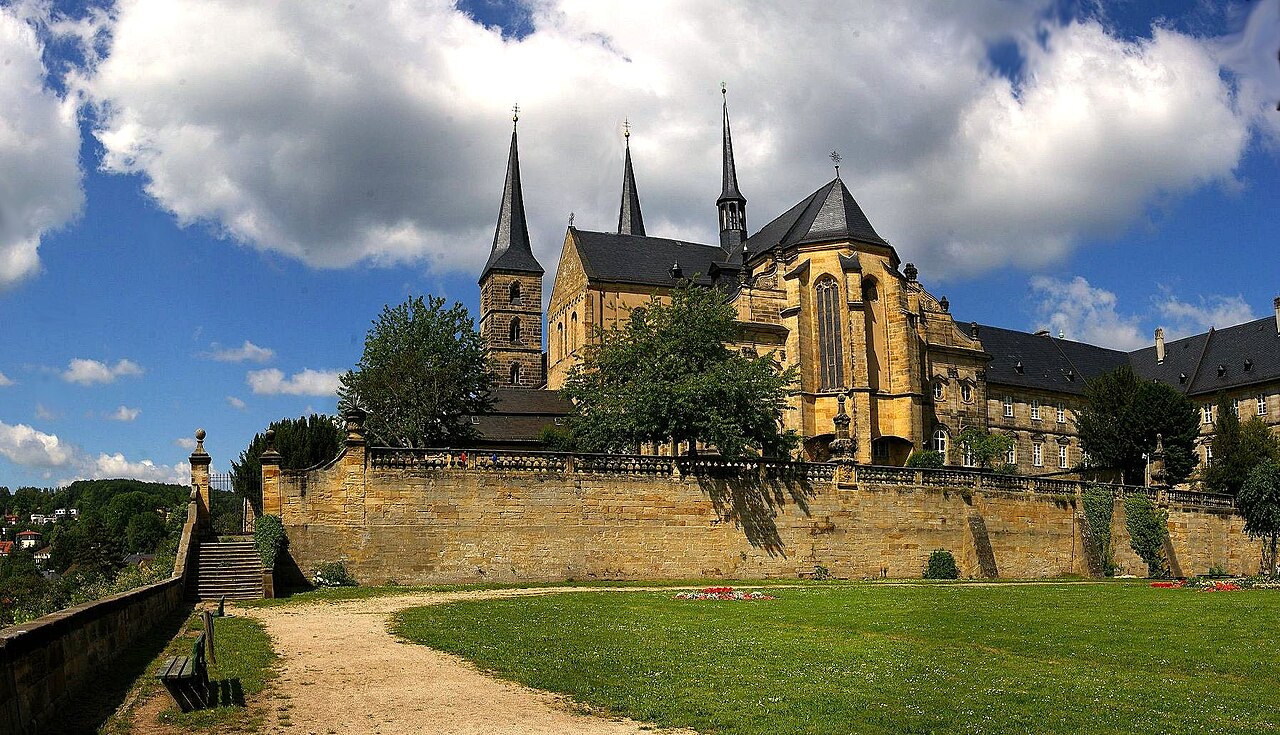
Bamberg Cathedral
Romanesque-Gothic imperial cathedral, a UNESCO World Heritage site.
Bamberg's old town isn't a museum — it's alive. The city came through the Second World War almost unscathed, which is why you'll find a complete historic townscape here of a kind that has become rare in Germany: medieval half-timbered rows, baroque townhouses, the Romanesque-Gothic imperial cathedral. Like Rome, Bamberg is built on seven hills, and the Regnitz flows between them — carrying the Altes Rathaus and giving Klein Venedig its postcard view. Add to that a brewing culture you can taste: the smoky Schlenkerla is only the best-known of several active breweries in town. And because the old town is compact, all of this lies just a few minutes' walk apart — perfect for a city walk where you experience more than you tick off.

Seven hills. Four breweries. One World Heritage site.
Hand-picked stops, connected into one optimized loop.
Not your thing? Drop any spot you like — Stubbs reworks the route instantly.
In the preview, Stubbs flies the loop first as a 3D flyover.
Stubbs files every place into a category — so you can see at a glance what to expect.
If you only have half a day — these are the spots you have to see.
Romanesque-Gothic imperial cathedral, a UNESCO World Heritage site.
A landmark built right in the middle of the Regnitz, with baroque frescoes.
A historic fishermen's settlement on the water — Bamberg's postcard view.
Germany's most famous smoked-beer brewery since 1405.
Former monastery complex with panoramic views over Bamberg.
Stubbs plans breaks into the route: café, restaurant or bar, each at the start, in the middle or at the end of the loop. For this tour, Stubbs suggested for example:
After about 40 minutes, between Michaelsberg Abbey and New Residence, Bamberg.
In the 3D flyover, swipe on to: Café Marle · Zuckerstück
After about 55 minutes.
In the 3D flyover, swipe on to: Klosterbräu · Das Schwarze Schaf
With the breaks, the walk gets 2 min longer. Example from 9 October 2026. Which places Stubbs suggests depends on your starting point, the day and opening hours; you choose the kind and timing. Places from OpenStreetMap.
Stubbs tailors the stops, the starting point and the timing to you — in seconds. A guided city tour costs 15–20 € per person; Stubbs guides you for free.

Bamberg's historic old town — a UNESCO World Heritage Site since 1993 — is best experienced on foot. Mapped by Stubbs builds a hand-picked walking tour: Klein Venedig, Bamberg Cathedral, the Altes Rathaus, Schlenkerla Rauchbier and other highlights are strung together into an optimized route based on your interests.
Free, no booking, ready in seconds. Stubbs knows the hidden corners — from the Harmoniegarten to the Buger Spitze to the Erbainsel — and guides you along the prettiest route to the next stop. Perfect for a weekend in Franconia, a day trip from Nuremberg or Würzburg, or as an add-on to a Bavaria road trip.
The Bamberg walking tour on your smartphone suits all ages and can be adapted to the time you have available at any moment. Choose which categories you want to see — from highlights and local favorites to cafés and beyond-the-city spots like the Erbainsel.
Getting there and the best time to visit: Bamberg is easy to reach by train — it's just under an hour from Nuremberg, about an hour from Würzburg, and around two hours from Munich by ICE. From the station it's about a fifteen-minute walk into the old town, and you won't need a car here. Bamberg is at its finest in late spring and early fall, when the beer cellars on the hills are open and the lanes aren't yet crowded. If you prefer things quieter, come midweek — on summer Saturdays the old town gets busy. Advent has its charm too, when the cathedral and half-timbered houses sit in the winter light.
What makes Bamberg special: like Rome, the city is built on seven hills — Domberg, Michaelsberg and five more, many with their own church and their own view over the rooftops. Then there's the Rauchbier tradition: at Schlenkerla, malt kilned over beechwood has been brewed for centuries, and the first sip reliably splits visitors into two camps. And then there's the Gärtnerstadt, the often-overlooked third part of the World Heritage Site — right in the middle of the city, gardener families have grown vegetables since the Middle Ages; licorice and onions once made Bamberg wealthy. Hill town, island town, gardeners' town: three quarters, three characters, one World Heritage Site.