🏛️
1
Holstentor
Late Gothic city gate with two round towers — Lübeck's world-famous landmark.
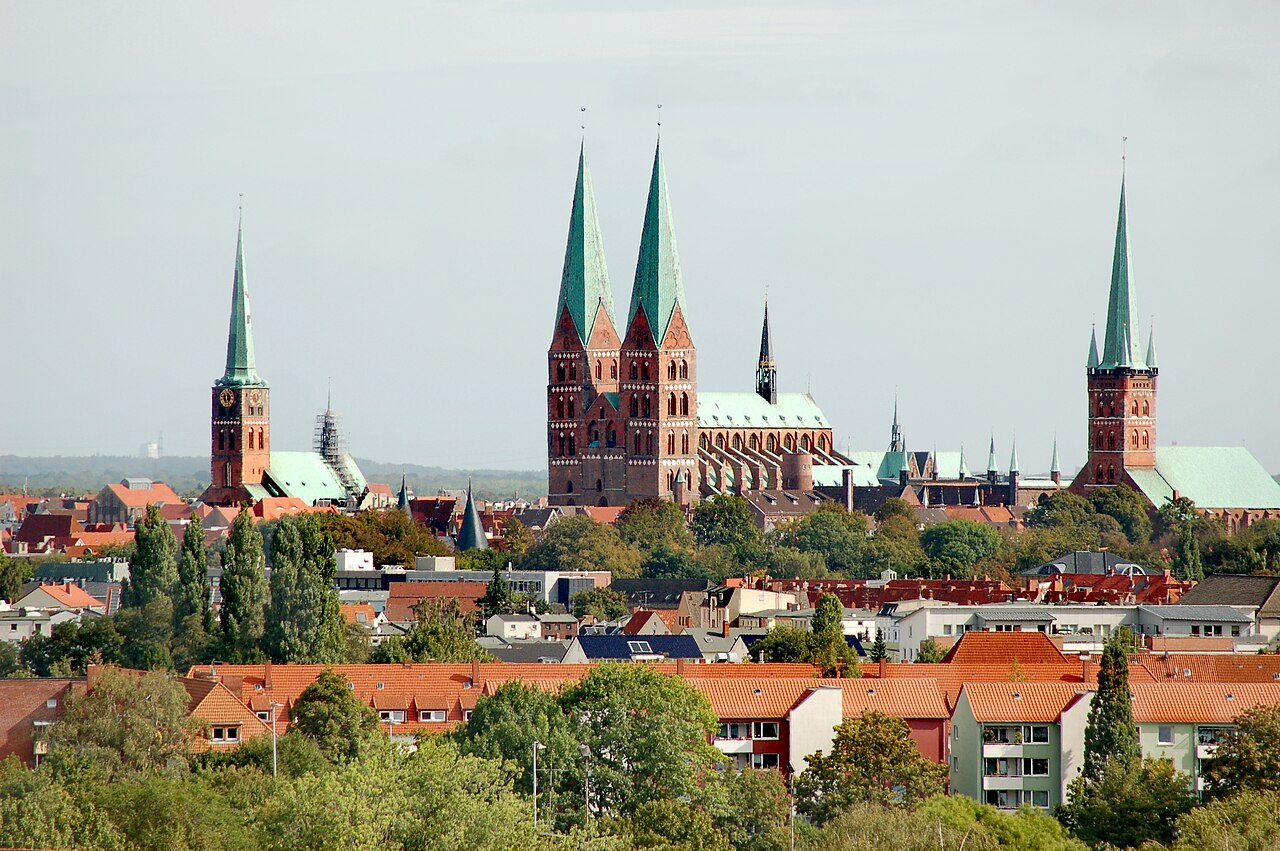
For centuries Lübeck was the Queen of the Hanse — trade across the entire Baltic region was directed from here, and that wealth still stands in brick to this day. The whole old town sits on an island between the Trave and the Wakenitz, crowned by the seven spires of its five main churches, chief among them the Marienkirche, whose design shaped churches all around the Baltic. Standing guard before it is the Holstentor, one of the most famous city gates in the world. And then a second, quieter layer: over 80 surviving alleyways and courtyards tucked behind narrow passages in the rows of townhouses. Add Thomas Mann, marzipan and harbor air — all on an island you can comfortably walk around on foot. That's exactly what this walking tour is made for.

Seven spires. One Holstentor. Queen of the Hanse.
Hand-picked stops, connected into one optimized loop.
Not your thing? Drop any spot you like — Stubbs reworks the route instantly.
In the preview, Stubbs flies the loop first as a 3D flyover.
Stubbs files every place into a category — so you can see at a glance what to expect.
If you only have half a day — these are the spots you have to see.
Late Gothic city gate with two round towers — Lübeck's world-famous landmark.
A masterpiece of Brick Gothic and the model for countless churches around the Baltic.
A literary museum devoted to Thomas and Heinrich Mann in the family's ancestral home on Mengstraße.
Winding medieval residential alleyways and almshouse courtyards hidden behind the townhouse facades.
Brick warehouse ensemble on the Trave, right next to the Holstentor.
Stubbs plans breaks into the route: café, restaurant or bar, each at the start, in the middle or at the end of the loop. For this tour, Stubbs suggested for example:
After about 50 minutes, between St. Mary's Church and Heilig-Geist-Hospital Lübeck.
In the 3D flyover, swipe on to: Double Coffee · Barjo
After about 80 minutes, between Schiffergesellschaft and Holsten Gate.
In the 3D flyover, swipe on to: Barcio · Nachtschwärmer
The breaks do not make the walk any longer: Stubbs rearranges the stops around them. Example from 9 October 2026. Which places Stubbs suggests depends on your starting point, the day and opening hours; you choose the kind and timing. Places from OpenStreetMap.
Stubbs tailors the stops, the starting point and the timing to you — in seconds. A guided city tour costs 15–20 € per person; Stubbs guides you for free.

Lübeck's old town island — a UNESCO World Heritage Site since 1987 — is best experienced on foot. Mapped by Stubbs builds a hand-picked walking tour: the Holstentor, Marienkirche, Buddenbrookhaus, Salzspeicher and more highlights are linked into an optimized route based on your interests.
Free, no booking, ready in seconds. Stubbs knows the hidden corners — from the Füchtingshof to the Engelsgrube to the Malerwinkel on the Obertrave with the finest view of the old town skyline — and guides you to the next stop along the prettiest route. Ideal for a day trip from Hamburg, a weekend on the Baltic Sea, or as the kickoff to a Schleswig-Holstein journey.
The Lübeck walking tour by smartphone suits all ages and can be adjusted to your available time at any moment. Choose for yourself which categories you'd like to see — from highlights and local favorites to cafés and spots beyond the city like Travemünde on the Baltic Sea.
Getting there and the best time to visit: Lübeck is easy to reach by train — from Hamburg you're there in around 45 minutes, from Kiel in about an hour and a half. From the main station it's about a ten-minute walk across the Puppenbrücke to the Holstentor. Lübeck is at its finest from May to September, when the cafés along the Obertrave set out their tables and excursion boats circle the old town island. Advent has its own magic, when the Christmas market glows in front of the town hall and marzipan season reaches its peak. A weatherproof jacket belongs in your bag up north anyway.
What makes Lübeck special: the alleys and courtyards — behind narrow passages in the rows of townhouses hide quiet medieval residential courtyards, many still lived in today; walk through respectfully and you'll discover a second city behind the city. The marzipan tradition: Niederegger has been producing in Lübeck since 1806 and made the city Germany's marzipan capital. And the literature: with Thomas Mann and Willy Brandt, Lübeck honors several Nobel laureates in dedicated museum houses — the Buddenbrooks are set in the very streets this walking tour leads you through. Brick, marzipan, world literature: that's Lübeck.