🏛️
1
Steinerne Brücke
A medieval stone bridge over the Danube from the 12th century — a masterpiece of bridge building.
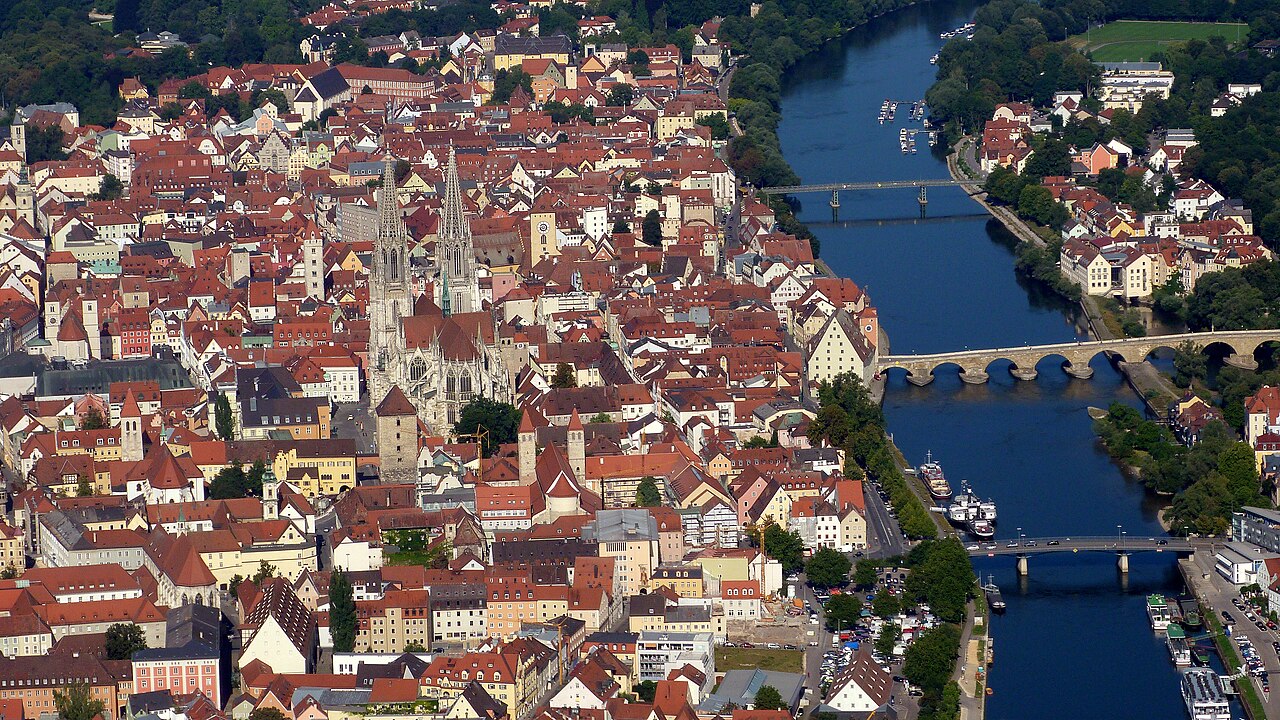
Regensburg got lucky with history: the city came through World War II almost untouched, so here stands one of Germany's best-preserved medieval cities — a UNESCO World Heritage Site since 2006. It all began with the Romans, whose legionary fort Castra Regina you can still put your hands on at the Porta Praetoria. In the Middle Ages, Regensburg grew rich on long-distance trade, and its patrician families built towers in the Italian style — which is why the old town feels almost Mediterranean in places. In between sits the Steinerne Brücke, a 12th-century marvel, the Gothic Dom St. Peter and a web of lanes full of cafés and taverns. Everything lies close together — perfect for a city walk where you experience more than you tick off.

One stone bridge. One cathedral. Two thousand years.
Hand-picked stops, connected into one optimized loop.
Not your thing? Drop any spot you like — Stubbs reworks the route instantly.
In the preview, Stubbs flies the loop first as a 3D flyover.
Stubbs files every place into a category — so you can see at a glance what to expect.
If you only have half a day — these are the spots you have to see.
A medieval stone bridge over the Danube from the 12th century — a masterpiece of bridge building.
A Gothic cathedral and home of the Regensburger Domspatzen.
A Gothic town hall complex with the Reichssaal, meeting place of the Perpetual Imperial Diet.
A Roman gate of the legionary fort Castra Regina from the 2nd century.
A tradition-rich historic cookshop right on the Danube next to the Steinerne Brücke.
Stubbs plans breaks into the route: café, restaurant or bar, each at the start, in the middle or at the end of the loop. For this tour, Stubbs suggested for example:
After about 35 minutes, between Scots Monastery and Schloss St. Emmeram.
Outdoor seating and vegetarian dishes.
In the 3D flyover, swipe on to: Legato · Bar Centro
After about 80 minutes.
In the 3D flyover, swipe on to: Heimat · Zur geflickten Trommel
The breaks do not make the walk any longer: Stubbs rearranges the stops around them. Example from 9 October 2026. Which places Stubbs suggests depends on your starting point, the day and opening hours; you choose the kind and timing. Places from OpenStreetMap.
Stubbs tailors the stops, the starting point and the timing to you — in seconds. A guided city tour costs 15–20 € per person; Stubbs guides you for free.

Regensburg's medieval old town — a UNESCO World Heritage Site since 2006 — is best experienced on foot. Mapped by Stubbs builds a handpicked walking tour: the Steinerne Brücke, Dom St. Peter, the Altes Rathaus, the Porta Praetoria and other highlights are linked into an optimized route based on your interests.
Free, no booking, ready in seconds. Stubbs knows the hidden corners — from the Jahninsel between the arms of the Danube to the Stadtamhof quarter and the patrician towers in the lanes of the old town — and guides you along the loveliest route to the next stop. Ideal for a day trip from Munich or Nuremberg, a weekend on the Danube or as a stage of a Bavaria tour.
The Regensburg walking tour on your smartphone suits all ages and can be adjusted at any time to the time you have available. Choose for yourself which categories you'd like to see — from highlights and local favorites to cafés and spots beyond the city like the Walhalla downriver near Donaustauf.
Getting there and the best time to visit: Regensburg sits on the Munich–Nuremberg rail line and is easy to reach — from Nuremberg in about an hour, from Munich in around an hour and a half. From the Hauptbahnhof you walk into the old town in about ten minutes, and you won't need a car here. The finest time for a guided walk is from May to September, when the beer gardens and the Danube bank show their best light. In Advent the Christmas markets in the old town and the romantic market at Schloss Thurn und Taxis beckon — and the city is busier accordingly.
What makes Regensburg special: the Steinerne Brücke, built in the 12th century and for centuries the only fixed Danube crossing for miles around — crusaders, merchants and emperors all passed over it. The patrician family towers that give the old town an almost Italian skyline; the Goldener Turm on Wahlenstraße is the best known. And the Roman traces: at the Porta Praetoria you stand before original masonry of the legionary fortress Castra Regina from the 2nd century. That the Immerwährender Reichstag met in the Altes Rathaus for over a century and a half also makes Regensburg one of the most important political sites in German history.